Time ripe to form intl. coalition against U.S.: Iranian politician
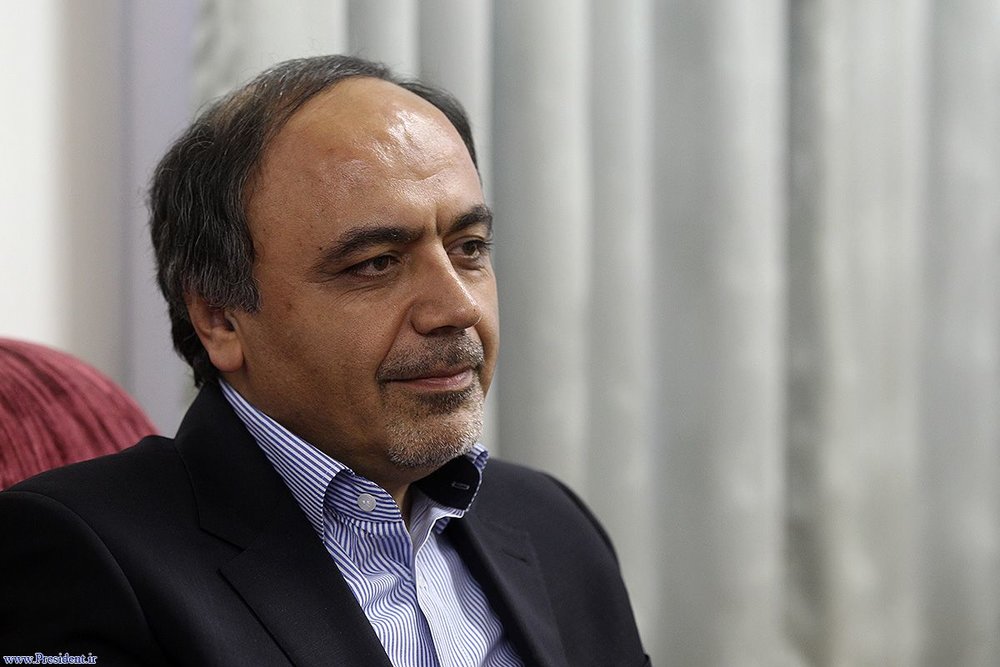
TEHRAN - Hamid Aboutalebi, a political advisor to President Hassan Rouhani, said on Monday that the “best time” has come for Tehran to form an “international coalition” against the United States.
U.S. President Donald Trump has resorted to different illusions to undermine the July 2015 nuclear deal between Iran and great powers. He told the Wall Street Journal on July 26 that he would be surprised if Iran is in compliance with the nuclear deal when recertification comes up again in three months.
“We’ll talk about the subject in 90 days but I would be surprised if they were in compliance,” Trump said.
Such remarks were made despite the fact that the State Department, under the Trump administration, has twice confirmed that Iran is in compliance with the agreement.
According to Foreign Policy Magazine, Trump has also “instructed a group of trusted White House staffers to make the potential case for withholding certification of Iran at the next 90-day review of the nuclear deal.”
Both as a presidential candidate and now as president, Trump has made the harshest criticisms against the nuclear agreement, officially called the Joint Comprehensive Plan of Action (JCPOA).
Aboutalebi, a foreign policy expert, said based on what Trump has recently said, the U.S. administration will anyway claim a violation of the nuclear deal by Iran.
“The U.S. does not attach importance to implementation of the JCPOA and verifications of the IAEA [the International Atomic Energy Agency] and the country will take decisions outside the JCPOA,” Aboutalebi pointed out.
According to the nuclear deal, Iran is obliged to limit its nuclear activities in exchange for a termination of financial and economic sanctions. The deal went into effect in January 2016.
The International Atomic Energy Agency as the UN watchdog body is tasked to monitor the implementation of the nuclear deal between Iran and great powers. It has reported six times that Iran is abiding by the terms of the deal. The compliance was also confirmed by the UN Security Council in late June.
“Two years after the conclusion of the Joint Comprehensive Plan of Action (JCPOA), the Secretary-General is immensely encouraged by the continued commitment by all participants to the agreement,” Under-Secretary-General Jeffrey Feltman told the UN Security Council.
Last week, the U.S. House of Representatives and Senate also approved a package of non-nuclear sanctions against Iran, a move which Tehran sees as an attempt by Washington to frighten away foreign investors.
The sanctions bill was passed by a 419-3 vote in the House and 97-2 in Senate.
Abbas Araqchi, Iran’s deputy foreign minister for legal and international affairs, has said these moves show Washington’s “continued animosity” with the Islamic Republic.
The U.S. State Department also released a media note on Friday claiming that the launching of a satellite-carrier rocket by Iran on Thursday was not consistent with UN Security Council Resolution 2231.
The Resolution 2231 endorsed the nuclear agreement signed between Iran, the European Union, Germany and the five permanent members of the UN Security Council.
NA/PA
Leave a Comment